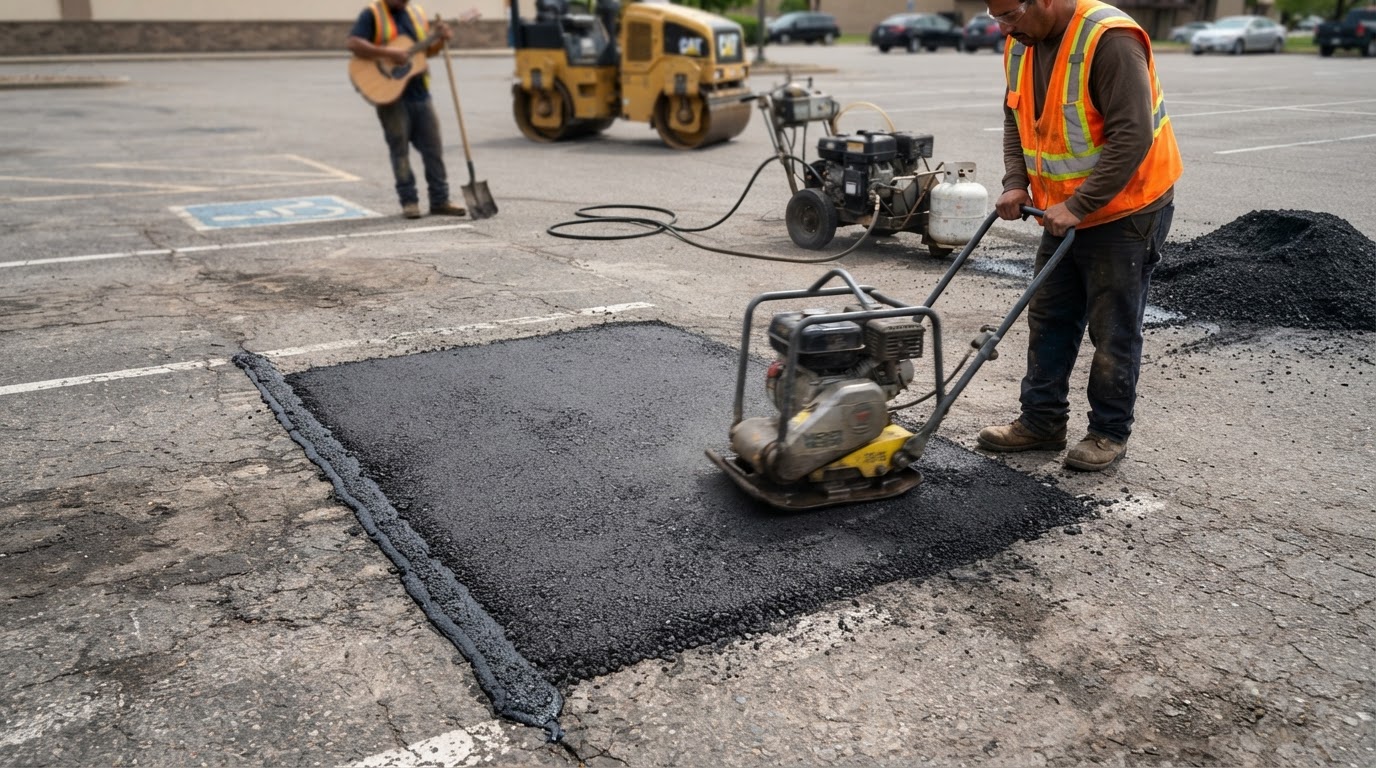
Crack sealing and repair
Our work focuses on addressing cracks early to reduce water intrusion and support pavement life.
- Crack cleaning
- Hot-applied crack sealing where appropriate
- Localized asphalt crack repair
- Preventive pavement maintenance

Protect your asphalt pavement with professional crack sealing and repair services.
Small cracks allow water to penetrate the pavement and weaken the layers underneath. Over time, traffic and weather can turn those cracks into potholes and larger areas of damage. Our asphalt crack sealing services are designed to address cracks early, reduce water intrusion, and help extend pavement life.
Crack sealing works by cleaning out debris and vegetation from the crack and filling it with a hot-applied sealant that bonds to the pavement walls. The sealant flexes with normal pavement movement to help keep water out of the base and subbase.
Not every crack is a candidate for sealing. Crack type, width, and the overall pavement condition determine whether sealing, patching, or replacement is the appropriate response. We assess the pavement before recommending an approach.
See asphalt patching and pothole repairCrack sealing is a preventive maintenance process that prepares and fills appropriate cracks.
Our work focuses on addressing cracks early to reduce water intrusion and support pavement life.
Severely damaged pavement, wide alligator cracking, and areas with base failure generally need patching or replacement rather than sealing.
Timely crack sealing can help property owners avoid more extensive and expensive repairs. By limiting water entry, crack sealing helps protect the base and subbase that support the pavement above.
Crack sealing is often combined with other preventive maintenance. When paired with sealcoating, it helps protect the surface while the sealed cracks continue to resist water. The asphalt sealcoating page describes how the two services work together.
When cracks have already progressed to potholes or depressed areas, sealing alone will not restore the pavement. The asphalt patching and pothole repair page covers repairs for that stage of damage.
Learn about asphalt sealcoatingCrack type and pavement condition determine whether sealing is the right response.
Feedback about working with Blackstone Roadway Consultants.
Customer reviews will appear here when our review feed is connected.
Not necessarily. Crack sealing is best suited to appropriate crack types and pavement conditions. Severely damaged areas may need patching or replacement.
Crack sealing fills individual cracks to keep water out. Sealcoating applies a protective layer across the whole surface. They address different needs and are often used together.
Performance depends on pavement condition, traffic, climate, and maintenance. Sealant may need periodic inspection and reapplication as part of an ongoing maintenance program.
Share your property location, the work you need and the result you have in mind. Photos, plans and information about the existing conditions can help explain your project.